

Serbia’s economy has undergone considerable transformation over the past several decades. Once part of the socialist economic system of Yugoslavia, the country passed through political instability, international sanctions, hyperinflation, and economic decline during the 1990s.
Since the beginning of the twenty-first century, Serbia has gradually developed a more open, market-oriented economy. Privatisation, foreign investment, trade liberalisation, infrastructure development, and the growth of private enterprise have connected the country more closely with European and global markets.
Today, Serbia’s economy combines traditional sectors such as agriculture, energy, and manufacturing with rapidly developing areas including information technology, software development, digital services, logistics, renewable energy, and creative industries.
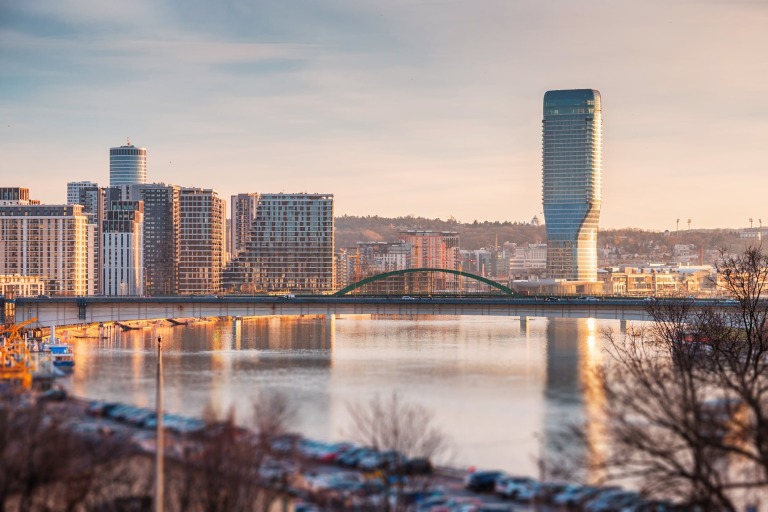
Belgrade is the country’s principal financial and business centre, while Novi Sad, Niš, Kragujevac, Subotica, Čačak, and other regional cities contribute through different combinations of industry, agriculture, services, technology, education, and trade.
The Structure of Serbia’s Economy
Services account for the largest part of Serbia’s economic activity. Retail and wholesale trade, banking, telecommunications, transport, tourism, public services, real estate, professional services, and information technology employ a significant share of the working population.
Industry and manufacturing remain important pillars of the economy. Serbia has a long tradition of producing machinery, vehicles, electrical equipment, chemicals, pharmaceuticals, textiles, food products, metals, and construction materials.
Agriculture continues to have a greater role than in many other European economies. Fertile land, varied climates, and strong food-producing traditions support the cultivation of grains, fruit, vegetables, industrial crops, and grapes, as well as livestock farming and food processing.
Construction and infrastructure development have also become increasingly visible, particularly through residential and commercial projects, new roads, railway modernisation, energy facilities, and urban development.
Industry and Manufacturing
Serbia’s industrial development has been shaped by its natural resources, technical education, manufacturing tradition, and location close to major European markets.
The automotive sector is among the most prominent branches of manufacturing. Vehicle production is supported by a broad network of companies producing electrical systems, tyres, metal components, plastics, and other specialised parts.
Mechanical engineering, metal processing, electrical equipment, chemicals, pharmaceuticals, rubber products, furniture, textiles, and construction materials also contribute to industrial output and exports.
Food and beverage production connects manufacturing directly with Serbian agriculture. Mills, dairies, meat-processing facilities, wineries, breweries, fruit processors, confectionery producers, and companies making packaged foods transform local agricultural products for domestic and international markets.
Former industrial centres are also adapting to new economic conditions. In some cities, traditional manufacturing remains dominant, while in others old industrial areas are being transformed through technology, logistics, creative businesses, and smaller specialised companies.
Agriculture and Food Production
Agriculture is one of the most recognisable parts of Serbia’s economy and remains especially important outside the country’s largest cities.
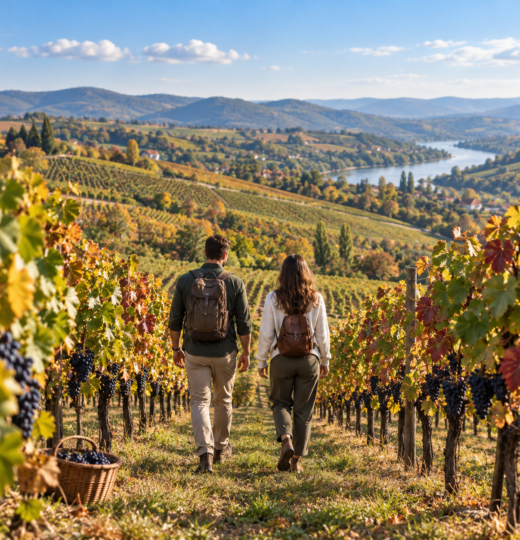
The fertile plains of Vojvodina support the large-scale production of wheat, maize, sunflower, soybean, sugar beet, and other crops. Central and western Serbia are known for orchards, berry production, livestock farming, and smaller family farms, while vineyards can be found in several distinct wine regions.
Serbia is particularly associated with raspberries, plums, apples, sour cherries, blackberries, peppers, and other fruit and vegetables. Some products are exported fresh or frozen, while others are transformed into preserves, juices, dried fruit, wine, rakija, and regional food specialities.
Food production also carries cultural importance. Many local products are closely connected with particular landscapes, climates, traditional methods, and communities. This relationship between agriculture, gastronomy, and place supports rural tourism, regional brands, and small producers alongside larger agricultural businesses.
The sector faces challenges that include climate change, fragmented land ownership, modernisation, access to finance, irrigation, and the need to increase the value of processed products rather than relying primarily on raw agricultural exports.
Technology and the Digital Economy
Information and communication technologies have become one of the most dynamic parts of Serbia’s modern economy.
Local and international companies develop software, mobile applications, business platforms, gaming products, artificial intelligence solutions, and services for clients around the world. Serbian engineers and technology professionals work in fields ranging from financial technology and cybersecurity to biotechnology and industrial automation.
Belgrade and Novi Sad have the largest technology communities, while Niš, Kragujevac, Čačak, and other university centres also support growing networks of companies, start-ups, research organisations, and specialised professionals.
Science and technology parks, university programmes, innovation funds, start-up centres, and coworking spaces have contributed to the sector’s development. The growth of remote work and digital services has also enabled smaller companies and independent professionals to participate more directly in international markets.
Beyond software exports, digitalisation is gradually changing banking, retail, agriculture, manufacturing, public administration, tourism, and everyday business operations throughout the country.
Trade and International Connections
Serbia’s geographical position gives it an important role between Central Europe, Southeast Europe, and markets further east and south.
The European Union is Serbia’s largest trading partner and the principal destination for much of the country’s exports. Serbia also maintains extensive economic relationships with neighbouring Balkan countries and other international partners.
Its exports include electrical equipment, machinery, vehicles and components, agricultural and food products, metals, rubber products, furniture, pharmaceuticals, and technology services. Imports include energy resources, machinery, industrial equipment, vehicles, electronics, chemicals, and consumer goods.
International trade is supported by major road and railway routes, river transport along the Danube and Sava, airports in Belgrade, Niš, and Kraljevo, and logistics centres located near important transport corridors.
Serbia is not a member of the European Union, but the process of European integration has influenced its legislation, trade standards, infrastructure, and economic policies.
Energy and Natural Resources
Serbia’s energy system has traditionally relied on coal-fired power stations and hydroelectric plants. The Danube and other rivers support significant hydropower production, while domestic coal has long played a central role in electricity generation.
The country is gradually expanding the use of renewable energy. Wind farms, particularly in Vojvodina and eastern Serbia, have become more prominent, while investment in solar power, biomass, small-scale production, and energy efficiency continues to grow.
The transition towards cleaner energy is one of Serbia’s major long-term economic and environmental challenges. It requires investment in new production facilities, the electricity grid, storage, environmental protection, and the gradual transformation of regions dependent on mining and conventional energy.
Serbia also possesses deposits of copper, gold, lead, zinc, coal, and other mineral resources. Mining provides employment and export income, but it also raises important questions concerning environmental standards, local communities, land use, and sustainable development.
Infrastructure and Transport
Serbia’s central location has made transport infrastructure an important part of its economic development.
Major European routes cross the country, connecting Central Europe with Greece, Bulgaria, Turkey, and the wider Balkan region. Motorway construction and reconstruction have improved connections between Belgrade, Novi Sad, Niš, Čačak, and several border crossings.
Railway modernisation aims to improve passenger and freight connections, while the Danube provides access to one of Europe’s most important inland waterways. River ports support the transport of agricultural products, raw materials, industrial goods, and containers.
Belgrade Nikola Tesla Airport is Serbia’s principal international air hub. Airports in Niš and Kraljevo provide additional passenger and cargo connections and contribute to the development of regional economies.
Digital infrastructure is equally important. Broadband networks, mobile connectivity, data centres, and electronic services support the continued growth of technology, commerce, remote work, and modern public services.
Serbia’s Main Economic Centres
Belgrade
As the capital and largest city, Belgrade is Serbia’s principal centre for finance, government, professional services, retail, construction, technology, media, tourism, and international business. The city attracts much of the country’s investment and highly qualified workforce.
Novi Sad
Novi Sad combines information technology, agriculture, food production, energy, finance, education, and creative industries. Its position in Vojvodina connects it closely with some of Serbia’s most productive agricultural and logistics areas.
Niš
Niš is an important economic centre in southern Serbia. Its location at the intersection of major transport routes supports manufacturing, electronics, logistics, trade, education, and a growing technology sector.
Kragujevac
Kragujevac has a long industrial tradition and remains strongly associated with vehicle production, components, metal processing, and manufacturing. Its university and central location also contribute to the development of services and technology.
Regional Economies
Different parts of Serbia have developed distinct economic profiles. Vojvodina is particularly important for agriculture, food production, energy, and logistics. Western Serbia combines manufacturing, fruit production, tourism, and small businesses, while eastern Serbia has important mining, energy, agriculture, and tourism resources. Southern Serbia contributes through manufacturing, food production, trade, logistics, and an expanding service sector.
Currency and Financial System
The official currency of Serbia is the Serbian dinar, abbreviated as RSD.
The National Bank of Serbia is the country’s central bank. It is responsible for monetary and foreign-exchange policy, price and financial stability, banking supervision, payment systems, and the issuance of banknotes and coins.
Serbia has a developed commercial banking sector that includes domestic and international banking groups. Payment cards are widely accepted in cities and tourist destinations, while digital and mobile banking are increasingly common.
Although many prices—particularly those related to property, vehicles, tourism, and international business—may also be informally expressed in euros, official domestic payments are made in dinars.
Key Facts About Serbia’s Economy
Economic system: Market economy
Official currency: Serbian dinar (RSD)
Central bank: National Bank of Serbia
Largest economic centre: Belgrade
Principal sectors: Services, manufacturing, agriculture, construction, energy, and information technology
Largest trading partner: European Union
Important exports: Electrical equipment, machinery, vehicles and components, food products, metals, rubber products, furniture, and technology services
Major transport route: The Danube and the European road and railway corridors crossing Serbia
Serbia’s Economy Today
Serbia’s economy continues to change as the country becomes more connected with international markets, develops infrastructure, attracts investment, and expands its technology and service sectors.
Its main advantages include a strategic location, industrial experience, productive agricultural regions, technical knowledge, growing digital expertise, and access to regional and European markets.
At the same time, the country faces long-term challenges. These include demographic decline, the concentration of economic activity in major cities, regional inequality, labour shortages in certain professions, productivity, environmental protection, the energy transition, and the continued modernisation of public institutions and infrastructure.
The future development of Serbia’s economy will depend not only on growth and investment, but also on education, innovation, environmental responsibility, support for local businesses, and the ability to create opportunities across all regions of the country.